





Introduction
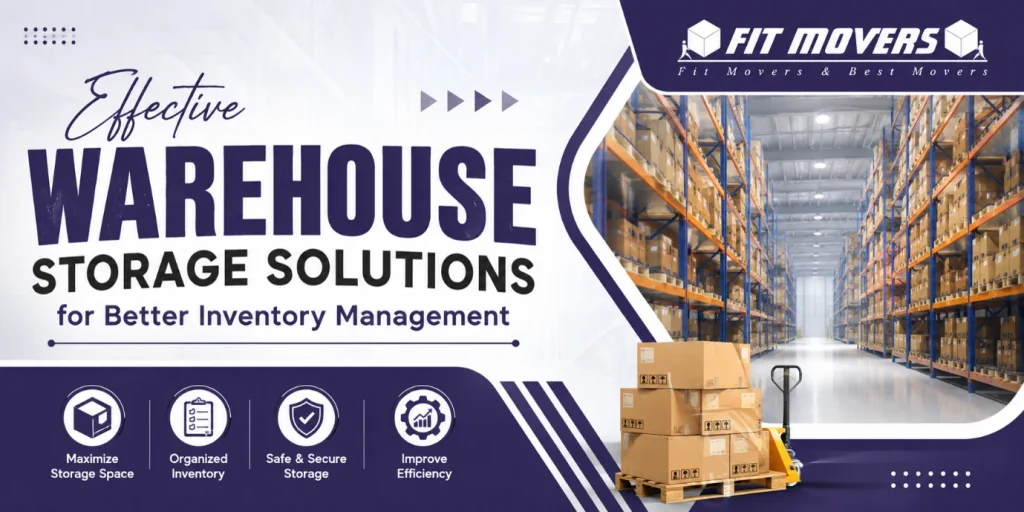
Efficient inventory management plays an important role in keeping warehouse operations organized, productive, and cost-effective. Businesses handling large quantities of products need practical storage systems that make items easy to locate, access, and move. Warehouse Storage solutions help businesses use available space effectively while maintaining better control over inventory. From pallet racking to shelving systems, the right storage approach can improve workflow, reduce unnecessary movement, and create a more organized working environment.
Why Efficient Warehouse Storage Matters
A well-organized warehouse allows employees to locate products quickly and maintain accurate stock records. Poor storage arrangements can lead to misplaced products, crowded aisles, slower order processing, and wasted floor space. Efficient storage systems provide designated areas for different product categories, making inventory handling simpler.
Proper organization can also improve workplace safety. Clear pathways, suitable rack placement, and structured product positioning help reduce obstacles and create smoother movement throughout the facility.
Pallet Racking Systems
Pallet racking is a popular solution for warehouses that handle large quantities of goods stored on pallets. Vertical space can be utilized efficiently, allowing businesses to store more inventory without expanding their floor area.
Selective pallet racking provides easy access to individual pallets and works well for warehouses with a wide range of products. Drive-in racking can accommodate larger quantities of similar products, while push-back racking provides multiple storage levels with efficient use of available space.
Industrial Shelving Solutions
Industrial shelving is suitable for smaller products, cartons, tools, spare parts, and other items that require manual handling. Shelving units can be arranged according to product categories, sizes, or stock movement frequency.
Adjustable shelving provides flexibility when inventory requirements change. Employees can modify shelf heights to accommodate different product dimensions, making the system useful for businesses with varied inventory.
Selective and High-Density Storage
Selective storage provides direct access to individual products or pallets, making it suitable for businesses managing multiple stock-keeping units. High-density storage systems focus on maximizing storage capacity within a limited area.
Businesses with high inventory volumes can benefit from compact storage arrangements. Careful planning is important to maintain suitable aisle widths and convenient access to frequently handled products.
Mobile Storage Systems
Mobile storage systems use movable shelving or racks to reduce unused aisle space. Storage units can be moved when access to a particular section is required, creating additional capacity within the same warehouse footprint.
Mobile solutions can be especially useful for facilities where floor space is limited. Proper planning can help balance accessibility with storage density.
Mezzanine Storage Solutions
Mezzanine floors create additional usable levels within a warehouse Storage. Businesses can use these elevated areas for inventory, packaging materials, documents, or other operational requirements.
A mezzanine system can make better use of vertical warehouse space while preserving valuable floor areas for movement and daily operations. Structural planning and appropriate load capacity should be considered before installation.
Automated Storage and Retrieval Systems
Technology has introduced advanced solutions for warehouses that require faster inventory handling. Automated Storage and Retrieval Systems, commonly known as AS/RS, use automated equipment to store and retrieve products.
Automation can reduce manual handling and improve inventory movement. Businesses managing high order volumes may benefit from automated systems that integrate with warehouse management software and inventory tracking platforms.
Organizing Inventory for Better Efficiency
Storage equipment alone cannot create an efficient warehouse. Inventory should be arranged according to product demand, size, weight, and handling requirements. Frequently ordered products can be positioned closer to packing or dispatch areas to reduce unnecessary travel.
Clear labels, barcode systems, and defined storage locations can also make stock identification easier. Regular inventory audits help identify misplaced products, slow-moving items, and stock discrepancies.
Safety Considerations for Warehouse Storage
Safety should remain an important part of warehouse planning. Racking and shelving systems need to be suitable for the expected load. Heavy products should generally be positioned on lower levels, while lighter items can be placed higher where appropriate.
Clear aisles, proper lighting, visible signage, and regular equipment inspections contribute to a safer workplace. Employees should also receive suitable training for material-handling equipment and storage procedures.
Choosing the Right Storage Solution
Every warehouse has different inventory requirements, available space, product characteristics, and operational goals. Businesses should assess storage capacity, product turnover, accessibility requirements, expansion plans, and budget before selecting a system.
A combination of pallet racks, shelving, high-density systems, and technology-driven solutions may provide better results than relying on one storage method. Careful warehouse planning can create a flexible setup that adapts to changing inventory demands.
Conclusion
Effective Warehouse Storage plays a key role in improving inventory organization, space utilization, product accessibility, and daily warehouse productivity. Pallet racking, industrial shelving, mobile storage, mezzanine systems, and automated solutions can address different operational requirements. Businesses that evaluate their inventory characteristics and warehouse layout can develop a storage strategy suited to their needs. Investing in the right Warehouse Storage solution can create a more organized facility and support smoother inventory management as business requirements grow.
