





Introduction
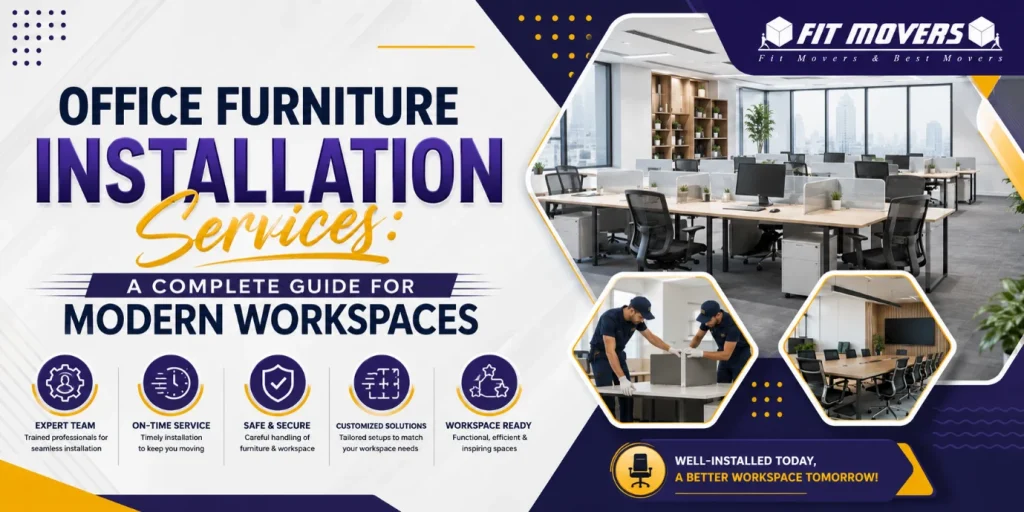
Modern offices require organized layouts, practical furniture, and efficient workspace arrangements. Office furniture installation services help businesses set up desks, workstations, chairs, cabinets, conference tables, reception furniture, and other office fixtures in a structured manner. Professional installation can simplify the setup process and help businesses prepare their workspaces for daily operations. From newly opened offices to renovated workplaces, proper furniture installation plays an important role in creating a functional and comfortable environment.
Why Office Furniture Installation Matters
Office furniture involves more than simply placing desks and chairs inside a room. Each item needs proper positioning, assembly, alignment, and adjustment. Incorrect installation can lead to unstable furniture, uneven surfaces, damaged components, or limited workspace access.
Professional installation helps coordinate furniture placement according to the planned office layout. Workstations can be positioned to provide suitable movement space, while storage units can be arranged for convenient access. Conference tables, reception desks, and executive furniture can also be installed according to the available floor area.
Types of Office Furniture Installation
Businesses may require installation for different furniture categories depending on their workspace requirements.
Workstation Installation
Workstations are commonly used in corporate offices, shared workspaces, and commercial environments. Installation involves assembling panels, desks, drawers, partitions, cable management components, and related accessories. Proper workstation placement can help create an organized working area for employees.
Office Desk Installation
Office desks come in different designs, including executive desks, computer desks, modular desks, and collaborative tables. Installation involves assembling individual components and positioning the desk according to the office floor plan.
Conference Room Furniture
Conference rooms require tables, chairs, storage units, presentation furniture, and related fixtures. Proper installation helps create a practical meeting environment while maintaining adequate movement space around furniture.
Reception Furniture
Reception areas create an important first impression for visitors. Reception desks, seating arrangements, storage cabinets, and decorative furniture need suitable positioning. Professional installation can help create a neat and welcoming entrance area.
Storage Furniture
Filing cabinets, cupboards, shelving units, and storage systems require careful assembly and placement. Correct installation can improve accessibility while making better use of available office space.
Benefits of Professional Installation
Professional furniture installation can provide several practical benefits for businesses. Trained installers can handle different furniture designs and assembly requirements while following manufacturer guidelines.
A structured installation process can reduce setup time and help businesses prepare work areas sooner. Proper assembly can also reduce the possibility of loose components, incorrect fittings, or alignment issues.
Professional installation can be particularly useful during office relocation or renovation projects, where multiple furniture items need to be assembled and positioned within a limited timeframe.
Office Furniture Installation During Relocation
Office relocation involves several activities, including packing, transportation, furniture dismantling, delivery, assembly, and placement. Coordinating furniture installation with relocation activities can simplify the transition into a new workspace.
Office furniture installation services can assist with workstation assembly, desk installation, cabinet placement, conference furniture setup, and other office furniture requirements. A planned installation schedule can help businesses organize departments and prepare work areas in stages.
Preparing for Office Furniture Installation
Proper preparation can make the installation process more organized. Businesses can begin by reviewing the office floor plan and identifying locations for desks, workstations, storage units, and meeting furniture.
Clear pathways should be available for moving furniture into the installation area. Existing items that could obstruct installation can be relocated before work begins. Electrical points, network connections, and other workspace requirements should also be considered when planning furniture placement.
Providing furniture specifications and installation instructions can help installers understand the required assembly process. A clear inventory of furniture items can also help track components during installation.
Modern Office Furniture Installation Trends
Workspaces are becoming more flexible, with businesses adopting modular furniture, collaborative workstations, ergonomic desks, adjustable tables, and space-efficient storage systems. Modular furniture allows offices to adapt layouts according to changing business requirements.
Cable management has also become an important part of office furniture installation. Proper cable routing can keep work areas organized and reduce visible wiring around desks. Flexible workstation arrangements can create spaces suitable for individual work, group discussions, and collaborative activities.
Ergonomic furniture installation is another growing consideration. Desk height, monitor positioning, chair placement, and workspace dimensions can influence employee comfort during daily work.
Choosing a Suitable Installation Provider
Businesses should review the provider’s furniture installation capabilities, service coverage, project coordination process, and ability to handle different furniture types. Clear communication regarding furniture quantities, installation locations, schedules, and workspace requirements can help reduce confusion during the project.
For larger office projects, installation planning should consider multiple departments, meeting rooms, reception areas, storage zones, and employee workstations. A structured approach can help maintain consistency across the entire workspace.
Conclusion
A well-organized office requires suitable furniture placement and proper assembly. Office furniture installation services can help businesses manage workstation setup, desk assembly, conference room furniture, reception areas, storage units, and office relocation requirements. Professional installation can save setup time, improve workspace organization, and create a practical environment for everyday business activities.
