





Introduction
Planning an overseas move involves several important decisions, and selecting the right shipping method is one of the most significant. Using sea freight or air freight, professional international movers and packers transport household belongings safely across countries. Every shipping option comes with different advantages depending on your budget, delivery schedule, shipment size, and relocation requirements. Understanding how each method works makes it easier to select the most suitable option for your international move.
Understanding Sea Freight for International Moving
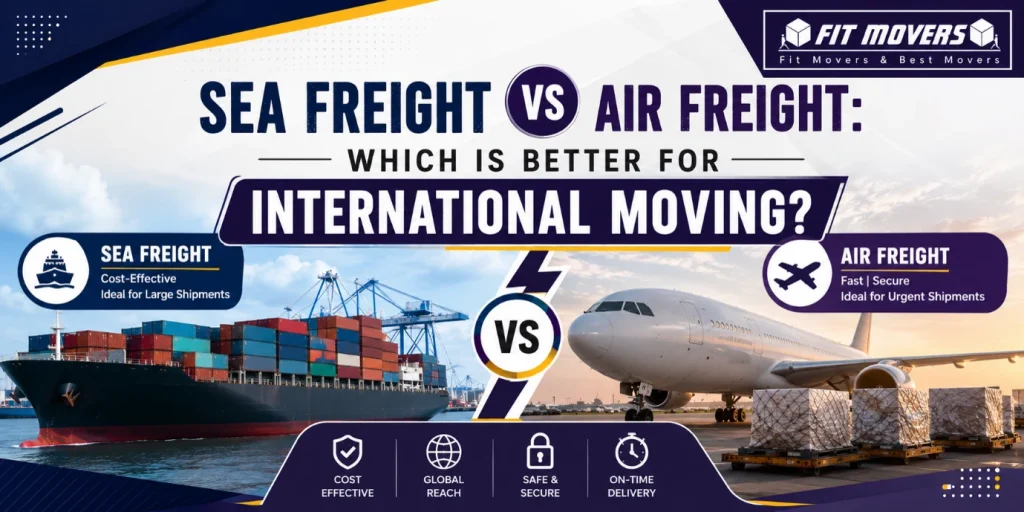
Sea freight is one of the most popular transportation methods for international household relocation. Large cargo ships carry shipping containers between ports across the world, making sea freight suitable for transporting furniture, appliances, household goods, and personal belongings.
People relocating permanently or moving an entire household often select sea freight because it accommodates large shipment volumes. Shipping containers are available in different sizes, allowing customers to transport everything from a few household items to complete home contents.
A structured installation process reduces interruptions and allows businesses to prepare their workplace within the planned schedule.
Faster Office Setup
Time is valuable during office relocation, expansion, or renovation. Delays in furniture assembly can postpone employee onboarding and daily operations.
Professional installers follow organized procedures to assemble, position, and arrange office furniture efficiently. A planned workflow helps complete installations within the expected timeline, allowing businesses to resume operations sooner.
Professional international movers and packers coordinate packing, container loading, customs documentation, port handling, and final delivery, making the shipping process more organized.
Advantages of Sea Freight
Sea freight provides several practical benefits for international relocation.
Cost-Effective for Large Shipments
Shipping household goods by sea is generally more economical for large moves. Families relocating with furniture, kitchen appliances, electronics, and personal belongings often find sea freight suitable for managing transportation costs.
Suitable for Heavy Items
Large furniture, dining tables, wardrobes, sofas, beds, washing machines, refrigerators, and other bulky items can be transported efficiently through sea freight.
Flexible Container Options
Customers can choose between shared containers for smaller shipments or dedicated containers for larger household relocations. Flexible options help accommodate different moving requirements.
Understanding Air Freight for International Moving
Air freight transports household belongings through commercial or cargo aircraft. Delivery is significantly faster compared to sea freight, making it suitable for urgent relocations or smaller shipments.
Many people use air freight for essential personal belongings, important documents, valuable household items, business equipment, or urgently required goods while the remaining household items travel separately by sea.
Professional international movers and packers arrange airport handling, documentation, customs clearance, and delivery after arrival.
Advantages of Air Freight
Air freight provides several important benefits for international relocation.
Faster Delivery
Air freight significantly reduces shipping time, allowing belongings to arrive within days instead of several weeks.
Ideal for Urgent Relocation
Individuals relocating quickly for employment, education, or family commitments often prefer air freight for immediate access to essential household items.
Better for Smaller Shipments
Smaller volumes of personal belongings can be transported efficiently without waiting for container availability.
Sea Freight vs Air Freight: Key Differences
Transportation Time
Sea freight generally requires several weeks depending on destination, shipping routes, and customs procedures.
Air freight usually delivers shipments within a few days, making it the fastest transportation method.
Shipment Capacity
Sea freight supports large household moves involving furniture, appliances, and complete home contents.
Air freight is better suited for lightweight or limited household belongings.
Cost
Generally, sea freight is more cost-effective for larger shipments.
Air freight usually involves higher transportation costs because of speed and airline cargo charges.
Best Use Cases
Sea freight works well for complete household relocation.
Air freight is suitable for urgent deliveries and smaller shipments requiring faster arrival.
Sea freight works well for complete household relocation.
Several factors help determine the right shipping method for your international move.
Budget
Transportation costs often influence shipping decisions. Families moving an entire home frequently choose sea freight, while smaller urgent shipments may justify the additional cost of air freight.
Moving Timeline
Delivery schedules play an important role. Air freight supports faster relocation timelines, while sea freight requires advance planning.
Shipment Volume
Large furniture collections and household goods are generally more suitable for sea freight. Smaller personal belongings often fit air freight requirements.
Destination Country
Customs procedures, shipping routes, airport accessibility, and port facilities may also influence transportation choices.
How International Movers and Packers Simplify Overseas Shipping
Professional international movers and packers coordinate every stage of overseas relocation. Services commonly include household packing, export packing, furniture dismantling, inventory preparation, customs documentation, shipping coordination, cargo tracking, customs clearance, transportation, furniture reassembly, and final delivery.
Organized planning helps reduce unnecessary delays while supporting a smoother international moving experience from departure to destination.
Tips for Choosing the Right Shipping Option
Selecting the appropriate shipping method becomes easier by following a few practical guidelines.
- Estimate the total shipment volume.
- Decide how quickly your belongings need to arrive.
- Compare transportation costs for both options.
- Separate essential items from non-essential household goods.
- Plan documentation before shipment.
- Work with professional international moving specialists for complete relocation support.
Careful planning helps simplify international relocation while improving overall coordination throughout the moving process.
Conclusion
Choosing between sea freight and air freight depends on your relocation priorities, shipment size, delivery timeline, and transportation budget. Sea freight remains an excellent option for transporting complete household belongings economically, while air freight provides faster delivery for urgent or smaller shipments. Professional international movers and packers help evaluate your moving requirements, coordinate shipping procedures, manage customs documentation, and organize transportation from origin to destination. Selecting the right shipping method allows your international relocation to progress smoothly while supporting a convenient transition into your new home.
